
12·
1 year agoBorn in 1909! The NAACP was founded, the first baseball statistician emerged, Taft was President. Just wow 🤯
Try oat-milk!
Born in 1909! The NAACP was founded, the first baseball statistician emerged, Taft was President. Just wow 🤯

“The Kremlin has never been richer – thanks to a US strategic partner”
I don’t know, maybe we should stop this…
Do not that this video seriously as to what it will likely look like. Keep in mind that as our sun grows into a red giant it would already be releasing extremely lethal solar flares. The inner planets being consumed by the sun would only come long, long after cooking them. Gravity would also be interesting at this point because the sun would have less mass. This video seems to take a lot of liberties as to how the physics of transitioning into a red giant would play out.
You have to go further than that. A huge population only cares about itself and has made it a part of their identity. Those who have it well don’t have to think about those without: drive to or work from home, live and socialize on internet platforms that isolate themselves from the plight of those with less. They can order everything online and have it delivered to their door - they have no clue and depending on how separated they are from those struggling, they may just say, “those people just aren’t working hard enough,” or some similar line of thinking. It’s not hopeless, but we need far more progress in the US, especially with wage inequality and affordable living/homes. Jeff Bazos is allowed to help buy up single family homes so the rich can rent them out…it makes me so angry and sad.

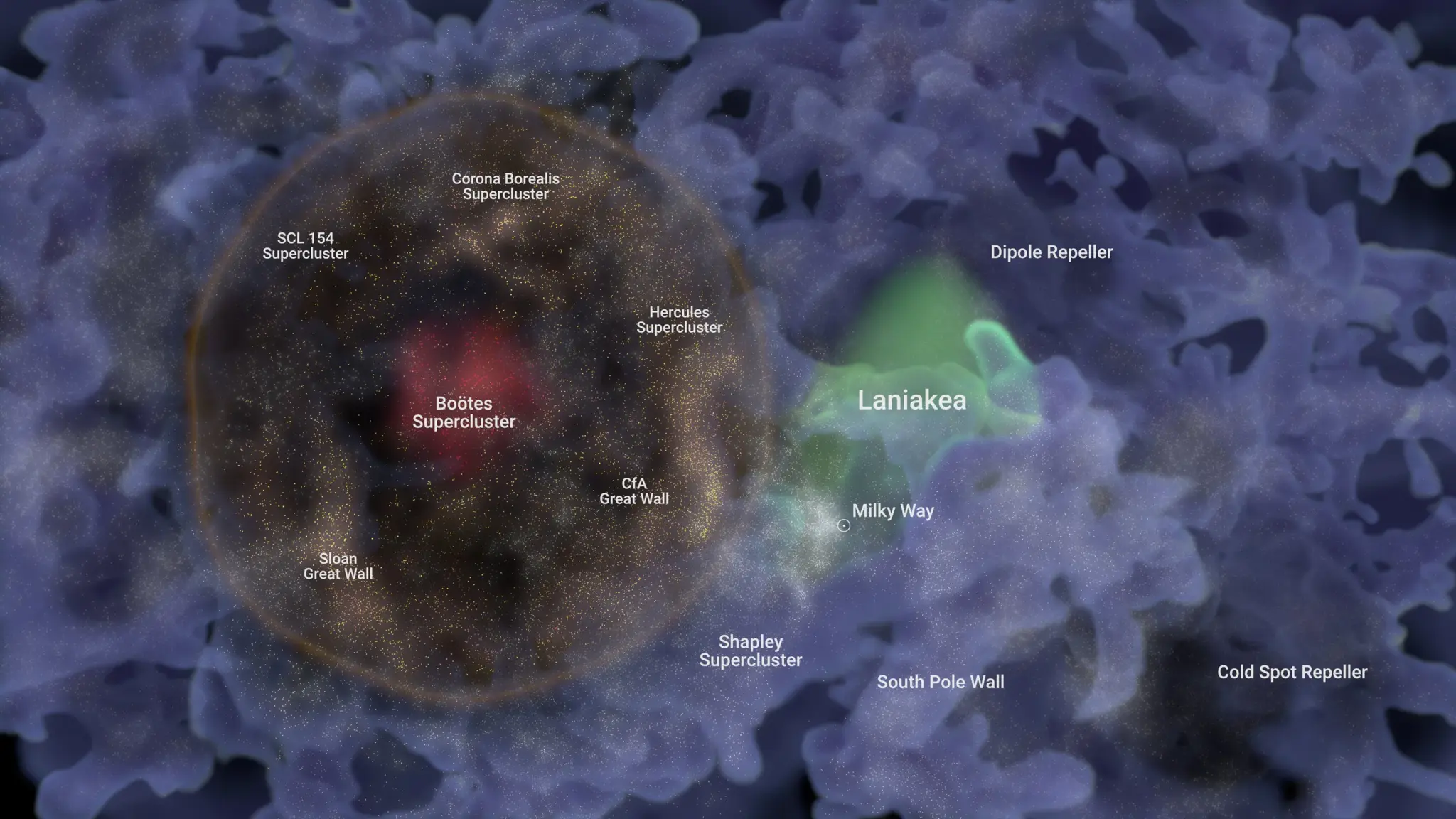
The structures of our observable universe are larger than you might think.
If you’re truly interested in jumping into the rabbit’s black hole.

Everyone’s knowledge obviously varies so I won’t assume yours, but I’d invite you to closely study stars that form into neutron stars and then study neutron stars until you have a very good understanding of their evolution; I found them to be more interesting than black holes and one of the most extreme and large objects where a lot of quantum mechanics is needed to best understand them. In this process you’ll learn about neutron star’s various but inevitable transformations. And the more you learn about them, the more you’ll understand black holes and the unanswered questions about them.
All of that said, here are two fun questions to consider in trying to answer your question:
Math is an extremely powerful tool but as we’re unable to know the limits of physics within a black hole, this leaves us able to play with mathematical theories and often allows for infinities to arise - to renormalize or not to renormalize, that is the question? So then you must ask yourself where you want to draw the line: in what can be observed (including what neutron stars reveal about extreme gravitational bodies), or add the mathematical theories that can explain the internal workings of a black hole? Sure, I’ll take interest in the latter but always remember it’s just a mathematical theory and continue to have an open mind to new discoveries…
I’m waiting for an Aussie to enter the chat…
Indeed. MOND has a drop of finical investment that Dark Matter is getting. That said, I do feel JWST continues to help put focus on the two and the more MOND enters debates, the more it will propagate. MOND, at the very least, shows us there’s a way to reliably predict and fit observations at galaxy regimes and some versions even purpose a consistent cosmological structure formation on all scales in relativistic extensions of MOND.
At least create jobs for the best within their construction fields and this create openings down the line. Win-win.
That last line was a little too forced. But the info near the end is good stuff. The universe is entropic and likely has more energy, movement and mass than previously observed.
If you start studying the electromagnetic properties of celestial bodies of all sizes, there’s seems to be some level of connection and/influence.
If you haven’t discovered it yet, here’s a good link to Tom Zlosnik’s iNSPIRE (HEP) Literature papers; he’s one of the lead researchers. While RMOND is down the list a little (cited ~113 times) his most recent papers are very interesting too and dig deeper into supporting RMOND. It’s a lot of math that goes well over my head but even for non-professionals, there is meaningful information between the equations. I’ll be eventually writing a profile for Tom and Constantinos Skordis (RMOND’s other author) and RMOND itself for this Lemmy instance.
Remember that all theories are best when they fit our observations, make predictions and hopefully can be tested. When we’re discussing going all the way back to the origin of our observable universe, some version of the Big Bang is likely (Black Hole cosmology, hot big bang,  Penrose’s Conformal cyclic cosmology and so on). Origin theories are made of complex math with many believing that the least complex should likely be closer to the origin then ones that have a lot of fine-tuning and extensive fudge math (making math fit what your bias, not what’s probable/likely). Is it possible for RMOND/MOND variant theories to support a universe without a big bang variant, possibly, but it depends on what math you’re using to account for things like dark energy, the CMB, and other cosmological phenomenon that needs to be explained.
A long watch but I enjoyed this lecture on the subject by Prof. Dr. Pavel: Kroupa: “The appearance of very high redshift quasars and the formation of SMBHs”
I was tempted to leave out the Wiki link in my post as it has some dated information, both for and against MOND, but it’s easy enough to find so I included it; Wiki also shows variant MOND theories and related links. Moreover, my post has links to current MOND data, which better explains criticisms and concerns. Keep in mind, MOND variants are still developing, mostly outside of the USA (where I’m from), and without significant funding; unlike Dark Matter. Lastly, this isn’t a crackpot theory, can be falsified (older models have been), makes predictions (has already made and proven many up to this point). All of this and more is addressed by Prof Dr Kroupa and his colleagues in the field, as well as in the data linked from my original post. I hope this helps one and all.
I actually love both movies and the manga goes very deep, but I read somewhere in the thread that he was looking for series and not so much movies.
If you love GitS, I recommend Patlabor movies (though the 3rd isn’t very good), if you haven’t already seen them.






I just hope if he loses, it’s by a wide margin so there’s no challenge. Just decisive victory and we can all move on….